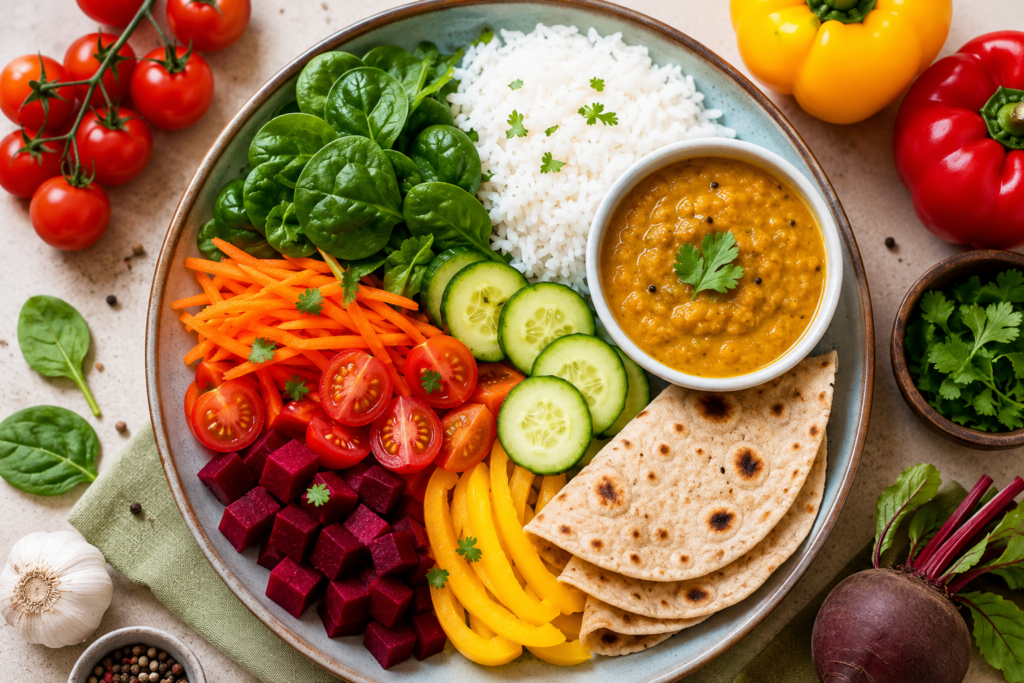
Protein has become a product. It arrives in tubs, in bars, in packets with impressive labels. Meanwhile the cheapest good protein in India has been on the stove for three thousand years.
Dal, rajma, chana, and every other pulse delivers roughly 7 to 9 grams of protein per cooked katori, for a few rupees. Curd adds more. Paneer adds a lot.
The old objection was that plant proteins are “incomplete” — low in one or another essential amino acid. Pulses run short on methionine; grains run short on lysine. Each one covers the other’s gap.
Which is precisely what dal-chawal is. And rajma-chawal, and idli-sambar, and chana with roti. The traditional Indian plate solved this problem long before anyone described it in a journal, and it did not need a supplement to do so.
To actually raise your intake without changing your cooking:
1. Make the dal thicker. Most households serve it closer to a soup than a dish, which quietly halves the protein per katori.
2. Add curd to a meal that does not have it — a katori is around 3 to 4 grams.
3. Keep roasted chana or peanuts where you currently keep biscuits.
The supplement industry sells you a solution. Your kitchen already had one.